





The role of hydrogen in achieving Net Zero Fourth Report of Session 2022–23
The House of Commons has released a Committee report, with recommendations to government, on "The role of hydrogen in achieving Net Zero" Fourth Report of Session 2022–23, the Government has two months to respond.

Contents |
[edit] Not a panacea for reaching the Net Zero
A key point form the report is that hydrogen is not a panacea for reaching the Net Zero emissions reductions by 2050 but can grow to become “a big niche” fuel in particular sectors and applications, the Commons Science and Technology Committee concludes in a new Report.
The report argues hydrogen will likely have a “specific but limited” role in decarbonising sectors, for example where electrification is not possible, for storing energy. The Government has been urged to give the industry more clarity over how and when it will make decisions about the role of hydrogen in the UK economy. It concludes hydrogen is not in the short term likely to be practically and economically viable for mass use for heating homes or fuelling passenger cars due to the significant cost, technological and infrastructure challenges associated, as well as the “unassailable” market lead held by alternatives such as electric cars.
[edit] Fuel intensive
Hydrogen is mostly produced by fossil-fuel intensive processes, whilst efficient production of low-carbon ‘green’ hydrogen relies on abundant cheap renewable electricity and so-called ‘blue’ hydrogen requires Carbon Capture and Storage, which large scale enough required to make a material contribution to emissions reductions. Given this, the Committee says it is “unwise” to assume hydrogen can make a large contribution to reducing UK greenhouse gas emissions in the short and medium term.
The Committee is “unconvinced” that hydrogen will be able to play a widespread role in heating homes by 2026, when the Government has said it could start mandating hydrogen-ready boilers in domestic homes, though it could be feasible to blend some hydrogen with natural gas. It also argues that policy for hydrogen metering in homes has been “overlooked”, with the energy regulator Ofgem unable to say whether current smart meters would be suitable for hydrogen or the cost implications for the consumer if they are not suitable.

[edit] Areas of strong potential
The Committee outlines the areas where the use of hydrogen has strong potential, including in the decarbonisation of UK industrial clusters, where hydrogen is already produced; in parts of transport such as areas of the rail network which are hard to electrify, bus networks which have a local pattern of operations susceptible to refuelling at depots, and some parts of shipping and aviation.
The Committee asks the Government to, in the next two months, outline a series of decision points between now and 2050 that will set out in practical terms the role of hydrogen in the UK’s future energy system. This should include specifying what scientific and technological progress needs to be made at each stage, such as requirements for the deployment of Carbon Capture and Storage to make blue hydrogen economic and the level of renewable generation that would lead to surplus power which could be used to produce green hydrogen.
[edit] Chair's comment
Committee Chair Rt Hon Greg Clark MP said:
“Hydrogen can play an important role in decarbonising the UK’s economy, but it is not a panacea. There are significant infrastructure challenges associated with converting our energy networks to use hydrogen and uncertainty about when low-carbon hydrogen can be produced at scale at an economical cost. But there are important applications for hydrogen in particular industries so it can be, in the words of one witness to our inquiry, “a big niche”.
“We welcome the Government’s high-level strategy and support of hydrogen trials, but future decisions on the role of hydrogen must increasingly be practical, taking into account what is technically and economically achievable. We call on the Government to set out a series of decision points, which would give industry the clarity that it needs.”
[edit] Further information
This article is based on the UK parliament committees report article "Hydrogen is not a panacea for reaching Net Zero, warn MPs." December 19, 2022
Find all publications related to this inquiry, including oral and written evidence
Inquiry: The role of hydrogen in achieving Net Zero
Science and Technology Committee
[edit] Related articles on Designing Buildings
Featured articles
Check out some of the best features and news from Designing Buildings as well as key stories from around the web.

Why construction can't afford to ignore the skills gap.
Building Safety Regulator, 19 August

Gill Kernick appointed Independent Chair of Residents’ Panel.
Connecting knowledge, technology and conservation
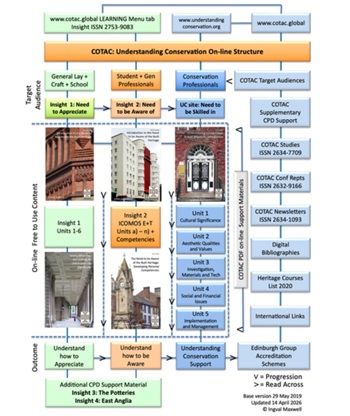
Building competence for the future of built heritage.
Building Regulations and Building Safety Act

CIOB publishes free advice for non-domestic clients.

Building Safety Newsletter from MHCLG.

An extraordinary record of steel engineering worldwide.
Households living near new pylons to save on bills.

ECA warns growth must not outpace grid capacity or skills.
The role of the client and decision making

CIOB response to built environment professions call for evidence.
Construction's sustainability reporting revolution

Tracking upfront embodied carbon with digital tools.
ECA welcomes procurement reforms

Public spending must back British jobs and skills.
Campaigning for Edinburgh: the Cockburn Association 1875-2049

The role of the civic voice in protecting character. Book review.